RealESALetter.com Review: ESA Services for Georgia in 2026
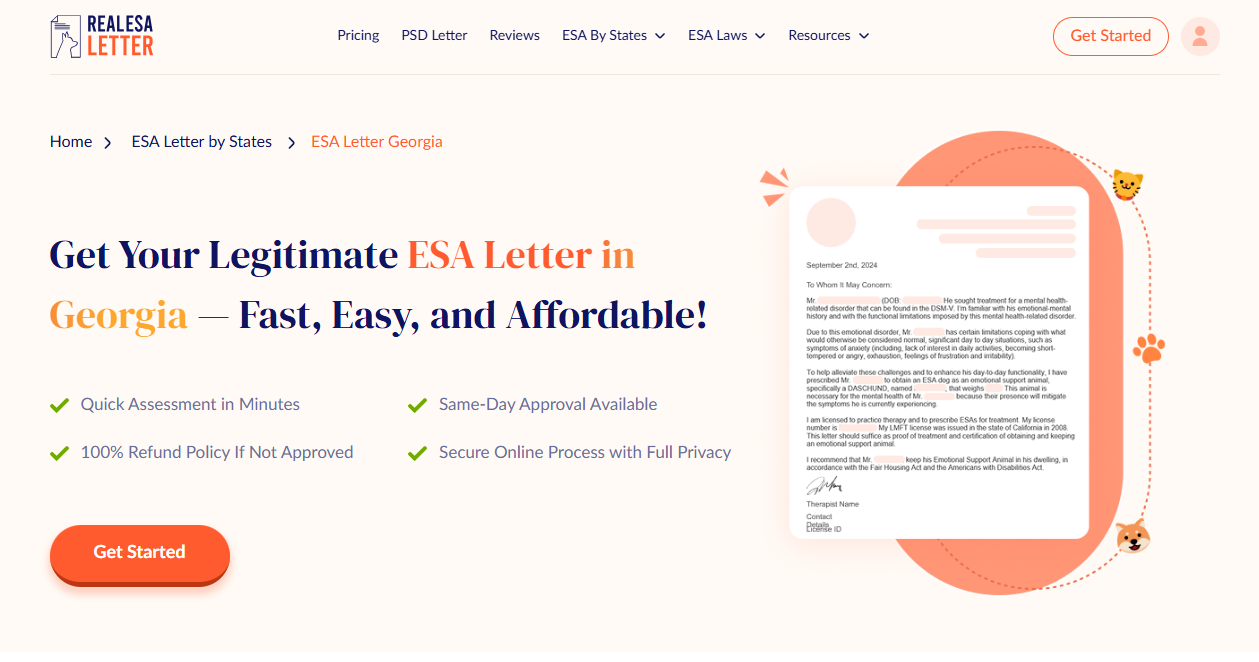
In 2026, finding trustworthy emotional support animal services in Georgia can feel overwhelming. I’ve explored multiple options over the years, and what stood out most was RealESALetter.com. Their process for obtaining a legitimate ESA Letter is straightforward and legally recognized, which matters a lot when you’re dealing with landlords or housing authorities. For anyone in Georgia, having a proper ESA document can make the difference between a smooth application and unnecessary stress. I even came across a review of RealESALetter.com that confirmed their reliability and efficiency, which gave me additional confidence in using their service.
Having personally gone through the process, I can say that RealESALetter.com combines clarity, convenience, and professional evaluation. From understanding state-specific rules to submitting documentation online, the service takes care of the major hurdles. In my experience, Georgia residents benefit from their system because it aligns with federal and state housing protections while simplifying the process for first-time users.
Why an ESA Letter Matters in Georgia
Many people assume emotional support animal letters are only useful for air travel, but in Georgia, they primarily serve housing needs. Landlords are legally required to consider valid ESA letters, and presenting an official letter from RealESALetter.com often prevents unnecessary disputes. I’ve seen friends in Atlanta and Savannah avoid conflicts with property managers simply because they submitted a properly documented ESA Letter Georgia.
What impressed me most is how a legitimate ESA letter communicates professionalism. It shows landlords that the request isn’t frivolous, which significantly reduces resistance. My own experience submitting a Georgia-specific letter proved this—it was concise, clinically sound, and met all the federal and state requirements for emotional support animals in rental housing.
The RealESALetter.com Process in Georgia
When I first explored their service, I appreciated the clear steps. After creating an account, I answered a straightforward online assessment. Within 24-48 hours, a licensed mental health professional reviewed my information and issued an ESA letter tailored for Georgia housing regulations. This process reassured me that the evaluation was legitimate and would hold up if a landlord questioned it.
One of my friends almost got frustrated trying to get an ESA letter elsewhere, but RealESALetter.com avoided all that confusion. Their service also explains the differences between a standard PSD Letter and an ESA letter, which is crucial for anyone in Georgia who might wonder if their animal qualifies for broader accommodations.
State-Specific Benefits for Georgia Residents
Georgia’s housing laws are generally aligned with federal guidelines, but nuances exist that tenants should know. For example, understanding when a landlord can question an ESA request or ask for documentation is essential. RealESALetter.com provides guidance on these state-specific aspects, which made my communication with my property manager much smoother. I particularly liked that they provide resources highlighting what landlords can and cannot request, which helped me feel confident when submitting my request.
Types of Animals Recognized as ESAs
While most people think of dogs and cats, Georgia tenants have successfully registered a range of animals as ESAs. RealESALetter.com includes clear guidance on Types of ESA Animals, helping me understand what’s acceptable. When I submitted my documentation, my landlord initially had questions about my cat’s breed, but the guidance I received explained how to address these concerns professionally.
Pricing Transparency and Renewal
One of the things I noticed right away is RealESALetter.com’s transparent Pricing. There were no hidden fees, which is a relief compared to some services that promise instant letters but charge extra for necessary documents. Knowing the cost upfront allowed me to budget properly, and the renewal process is simple if your ESA letter expires. The ESA Letter Renewal option ensures you remain compliant with Georgia housing regulations year after year.
Real-Life Experiences with Landlords
From my own perspective, the hardest part of the ESA process is sometimes just presenting your request calmly. A friend of mine in Atlanta had a landlord hesitant about emotional support cats, but after submitting a well-documented letter from RealESALetter.com and explaining the animal’s behavior plan, the landlord approved the accommodation without issue. I also found an external RealESALetter Review that highlighted similar success stories, which reassured me that my approach was aligned with best practices.
Tips for Georgia Residents Seeking ESA Letters
Here’s what I’ve learned from experience:
- Always ensure your letter is issued by a licensed mental health professional.
- Keep digital and printed copies handy for housing applications.
- Provide a brief description of your ESA’s behavior and care plan to preempt landlord concerns.
- Renew your ESA letter annually to stay compliant with state and federal guidelines.
Conclusion
Overall, RealESALetter.com has made the ESA process in Georgia approachable and legally sound. Their combination of licensed evaluations, clear instructions, and state-specific guidance ensures that residents can secure housing without unnecessary stress. From my experience, their system removes the guesswork and provides peace of mind for both tenants and landlords.A detailed article ESA Letter Strength at RealESALetter.com tells in detail about ESA letters from RealESALetter.com
If you’re a Georgia resident considering an ESA, I recommend using RealESALetter.com for a legitimate, professionally issued letter. Their process is smooth, reliable, and aligns with housing laws, making it easier to live comfortably with your emotional support animal. Having the proper documentation in hand truly changes the rental experience and helps you avoid potential legal complications.
Frequently Asked Questions
1. What is an ESA letter, and why do I need one in Georgia?
An ESA letter is a formal document from a licensed mental health professional stating that you have a qualifying emotional or psychological condition and that an emotional support animal helps alleviate your symptoms. In Georgia, landlords are required to consider valid ESA letters when evaluating housing requests. Without this documentation, your animal may be treated as a standard pet, which could lead to denied applications or additional fees. Having an official ESA letter ensures that your accommodation request is legally recognized and taken seriously.
2. How do I know if RealESALetter.com is legitimate for Georgia residents?
RealESALetter.com is a licensed and recognized provider that follows proper evaluation protocols for emotional support animals. The process involves an assessment reviewed by a licensed mental health professional who can confirm your need for an ESA. Georgia residents can trust this service because it aligns with both federal fair housing guidelines and state-specific considerations, offering a professional letter that is more likely to be accepted by landlords and property managers.
3. Can any type of animal qualify as an ESA in Georgia?
Most ESAs are dogs or cats, but the law does not limit the type of animal as long as it provides emotional or therapeutic support. In practice, landlords in Georgia are more accepting of common household pets, while exotic or oversized animals may face additional scrutiny. What matters most is that the animal supports your mental health and can live in housing without posing safety risks or causing significant disruptions.
4. How long is an ESA letter valid, and do I need to renew it?
ESA letters are generally valid for 12 months from the date of issuance. Landlords may request a current letter to ensure that the need for an emotional support animal is still active. Renewing your ESA letter annually is important in Georgia because it prevents disputes with property managers and ensures compliance with housing laws. Renewal is usually straightforward and can be done with the same licensed provider who issued your original letter.
5. What should I include when submitting my ESA request to a landlord?
When presenting your ESA letter, it helps to include a brief description of your animal’s behavior, care plan, and how it supports your emotional needs. This shows responsibility and helps alleviate landlord concerns about property damage, noise, or cleanliness. Keeping digital and printed copies of the letter, along with any additional explanation about your ESA’s behavior, increases the likelihood of a smooth and positive response from your landlord.
6. Can a landlord legally deny my ESA in Georgia?
Landlords can only deny an ESA if the animal poses a direct threat to others, causes substantial property damage, or creates an unreasonable financial or administrative burden. They cannot refuse your request simply because they have a no-pet policy or personal dislike of animals. As long as your ESA letter is legitimate and the animal is well-behaved, denials are generally not legally justified in Georgia, and you have the right to request reasonable accommodation.
7. Are ESA rights the same as service animal rights in housing?
While ESAs and service animals are treated differently in public spaces, housing protections for ESAs are robust. In Georgia, an ESA is allowed in housing even where pets are restricted, provided you have a valid letter. The main difference is that service animals are trained to perform specific tasks for a disability, whereas ESAs provide emotional support. Landlords focus on the documentation rather than the animal’s training, giving ESA owners strong legal standing in their housing requests
Related Resources 📚
- Everything You Need to Know About Getting a Legit ESA Letter Online in 2025
- ESA Letter for Housing and Dogs
- How I Registered My Dog as an Emotional Support Animal
- Top 7 Ways ESAs (Dogs & Cats) Reduce Stress
- Emotional Support Animals (ESAs): Improve Your Mental Well-Being in 2025
- The Complete 2025 Guide to Emotional Support Animal Letters
- ESA Letter Benefits 2025: Legal, Mental & Lifestyle